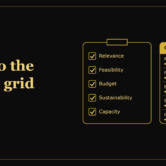

When a funder publishes a call for proposals, it usually also says how proposals will be judged. Relevance, feasibility, budget, sustainability, organisational capacity: each criterion is often given a weight or a maximum score. Reviewers then read every proposal with that grid in hand.
Yet many proposals are written as general project descriptions. The information is there somewhere, but the reviewer has to hunt for it. A strong project can lose points simply because its evidence is hard to find.
Here is a simple method to write with the scoring grid in mind.
1. Turn the criteria into a table
Copy every evaluation criterion from the call into a table, with its weight or maximum score. If the call lists sub-criteria or guiding questions, add them too. This table becomes both your writing plan and your final checklist.
2. Map each section to a criterion
For every section of your proposal, note which criterion it answers. If a criterion has no section answering it, you have found a gap. If a section answers no criterion, ask whether it belongs in the proposal or can be shortened.
3. Use the funder’s own vocabulary
If the call talks about sustainability, use that word in a heading rather than something like “future plans”. Reviewers scan for the terms they have to score. Matching their language helps them find your answers quickly and score them with confidence.
4. Give space where the points are
Look at the weights. If relevance and feasibility count for half of the score, they deserve a large share of your pages. Two pages of organisational history followed by a few lines on the implementation plan is a common imbalance.
5. Score your own draft before you submit
Ask a colleague who did not write the proposal to score it against the grid, and to be honest. Where they hesitate or cannot find an answer, a reviewer will too. Fix those passages first.
Three common mistakes to avoid
- Writing first, checking the criteria later. The grid should shape the proposal from the start, not be a last-minute check.
- Hiding key evidence in annexes. If a criterion depends on it, summarise it in the main text and point to the annex.
- Ignoring page or word limits. Going over can mean disqualification, and last-minute cuts often remove the very content reviewers need.
What next?
Making the reviewer’s job easy is part of writing a winning proposal. Before your next submission, build the grid table first and let it guide every section.
Alfemis Solutions supports organisations with grant writing and proposal development, and with review and quality assurance of proposals they write themselves. Contact us to discuss your next application.